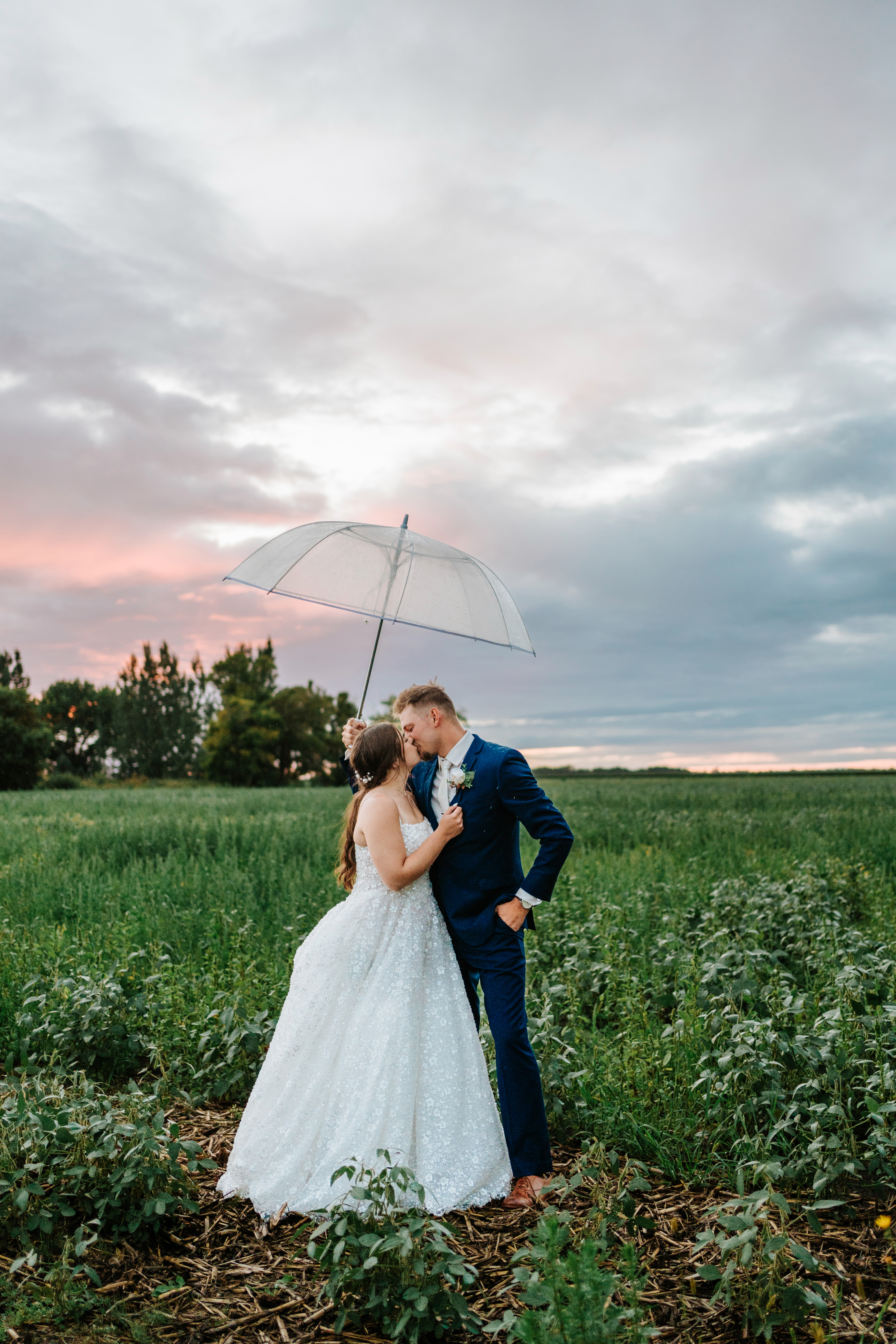
Couple sharing an umbrella kiss at golden hour on the prairie — wedding photography by Ngo Photography Winnipeg
Planning Guide · Wedding Photography · Booking

Questions to Ask Your
Photographer
Before You Book

By Chris Ngo April 2026 · 9 min read

Most couples spend more time choosing a venue than they spend vetting their photographer. That's understandable — the venue is a physical space you can visit, a cost you can compare. A photographer is harder to evaluate. You're not just hiring someone who takes photos. You're hiring someone who will be at the most intimate moments of your wedding day, making hundreds of invisible decisions on your behalf, and delivering the only physical record of the whole thing. As a Winnipeg wedding photographer who shoots around 20 weddings a year, these are the questions I'd want every couple to ask — and what the answers actually tell you.

In This Guide
  1. Can I see a full wedding gallery?
  2. How many weddings do you shoot per year?
  3. What happens if something goes wrong?
  4. What does your pricing actually include?
  5. How quickly do they respond to you?
  6. How long until we get our photos?
  7. What do you need from us?
  8. Have you shot at our venue before?
  9. Are you insured?
  10. What's in the contract?
  11. Does this feel right?

This is the single most important thing you can ask. Not a highlight reel. Not a portfolio of greatest hits. A complete gallery — every image delivered from a single wedding, beginning to end.

A highlight reel shows you the best 30 shots from a photographer's best weddings. It's a marketing document. A full gallery shows you what you will actually receive: how consistent the quality is across an eight-hour day, how the photographer handles difficult lighting inside a dark church or a dimly lit reception hall, how complete the storytelling is from getting-ready through the last dance. It shows you whether there are 400 beautiful images or 80 beautiful images and 320 that are mediocre filler.

A photographer who can't or won't share a full gallery with a prospective client — citing privacy, saying they don't keep them, or steering you back to their portfolio — is telling you something worth knowing. Most photographers who produce consistently strong work have no hesitation sharing a full gallery under a simple privacy agreement. Ask for it. Every time.

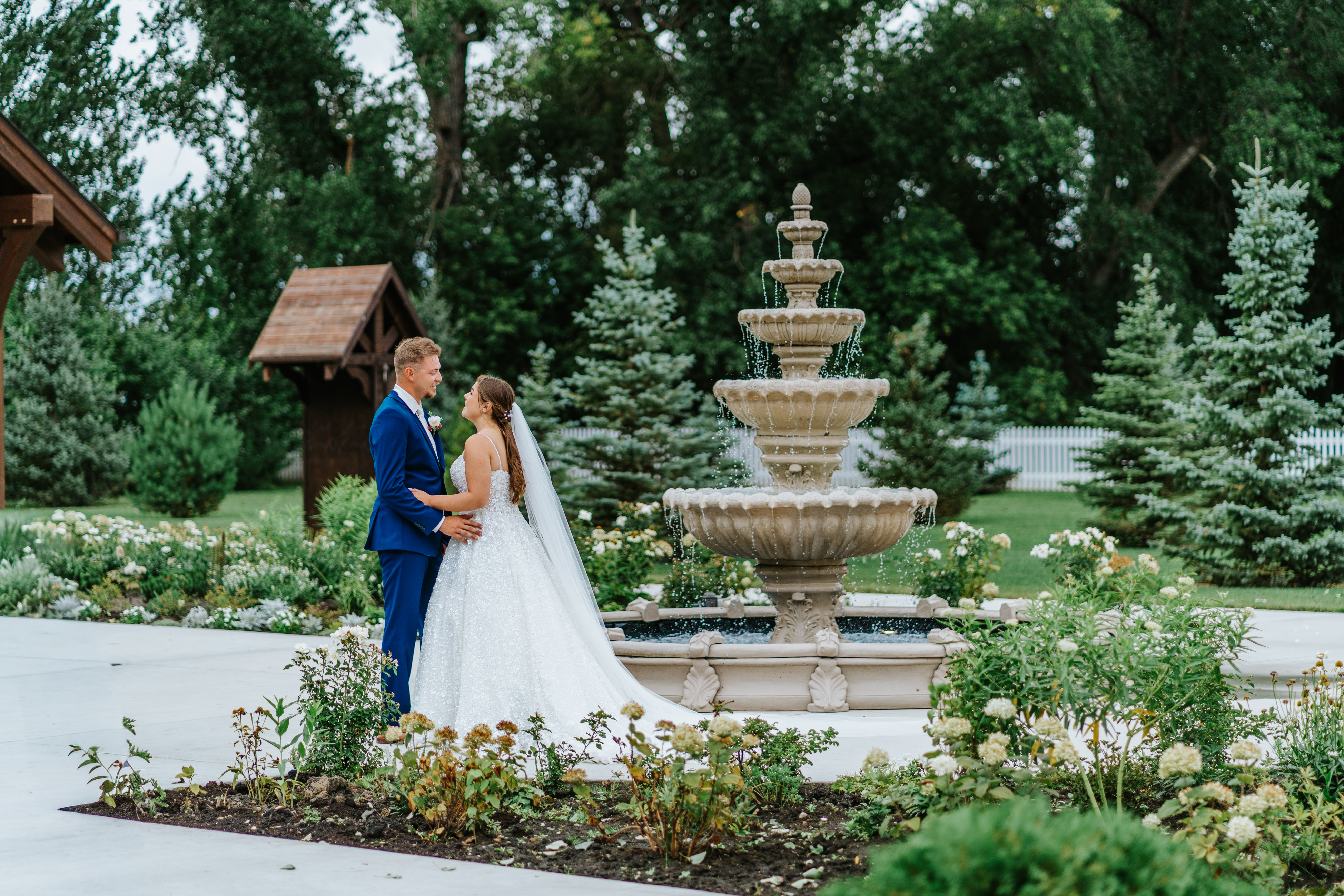
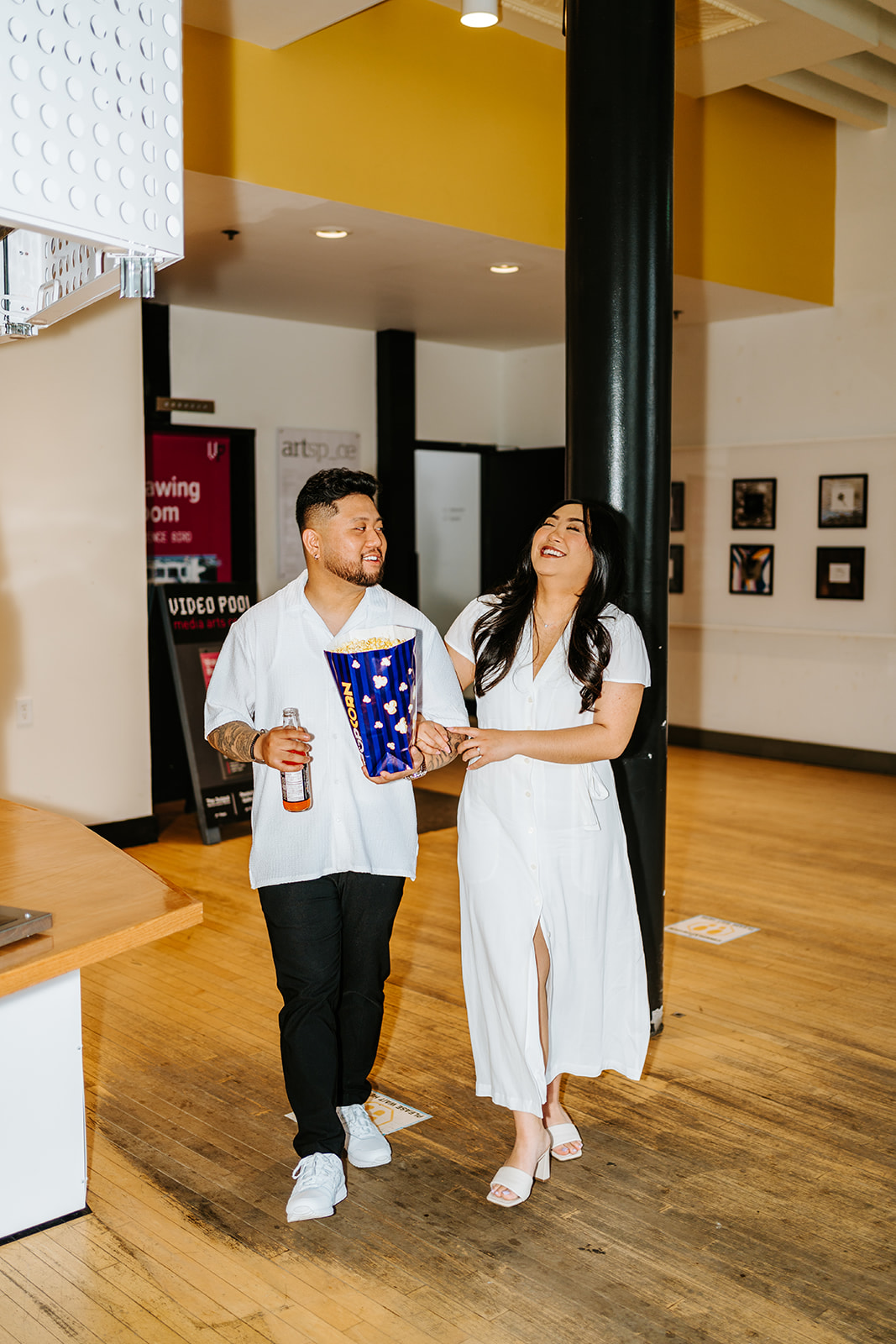
Erin and Jayden photographed in the garden at Buttercup Café — wedding photography by Ngo Photography
Every gallery should look like this from beginning to end — not just the hero shots.

Question 02 — How many weddings do you shoot per year?

Volume tells you something — but not everything. A photographer shooting 50+ weddings per year can be exceptional; a photographer shooting 8 can be inexperienced. The more revealing version of this question is: how many weddings do you take per weekend?

A photographer who will only ever have one wedding per day is giving yours their complete focus. They're not arriving at your reception mentally halfway out the door to the next event. They haven't already shot eight hours somewhere else. That single-wedding commitment is a meaningful indicator of how seriously they take each client — and it's a more reliable signal than annual volume alone.

Some photographers — particularly those working with a second shooter — can handle multiple bookings per weekend by splitting coverage. If that's the model, ask clearly: who will be the lead photographer at your wedding, and what's their experience level? The name on the website may not be the person behind the camera on your day.

Question 03 — What happens if something goes wrong?

This is the question most couples feel awkward asking, and the one that matters most if you ever actually need the answer. Ask it directly: if you were in an accident the morning of my wedding, what would happen?

A professional photographer should have a clear answer. That might mean a trusted network of photographers at a similar level who cover for each other. It might mean a senior second shooter trained to step into the lead role. What it should never mean is "I'm sure something would work out." Vague reassurance is not a contingency plan.

Ask the same question about equipment: do you carry backup camera bodies and lenses? Memory card failure, camera malfunction, and lens issues are rare but real — the difference between a photographer who carries redundant gear and one who doesn't is the difference between a recoverable moment and an unrecoverable one.

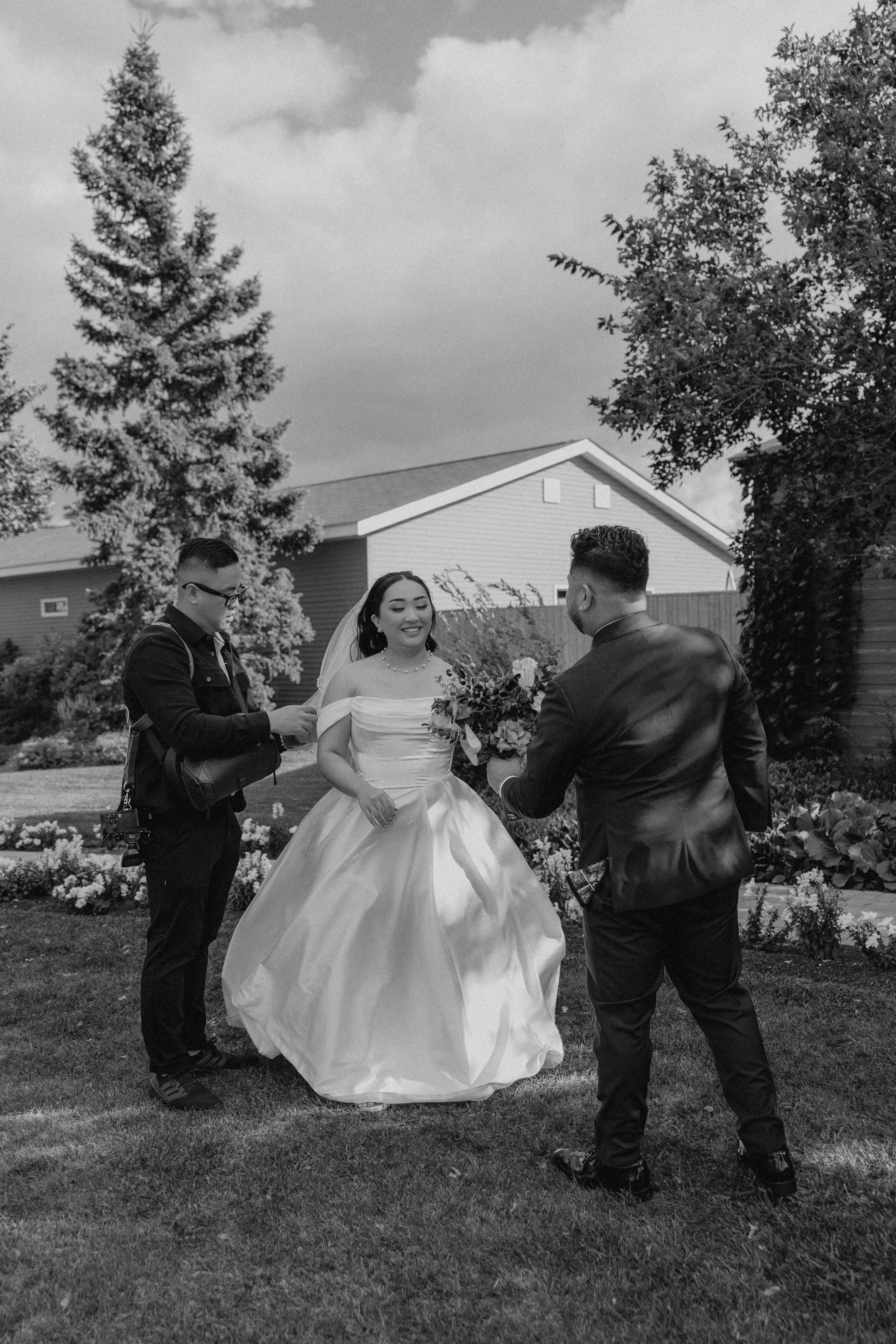
Paul and Ayanna sharing their first look in the garden at Breezy Bend — wedding photography by Ngo Photography
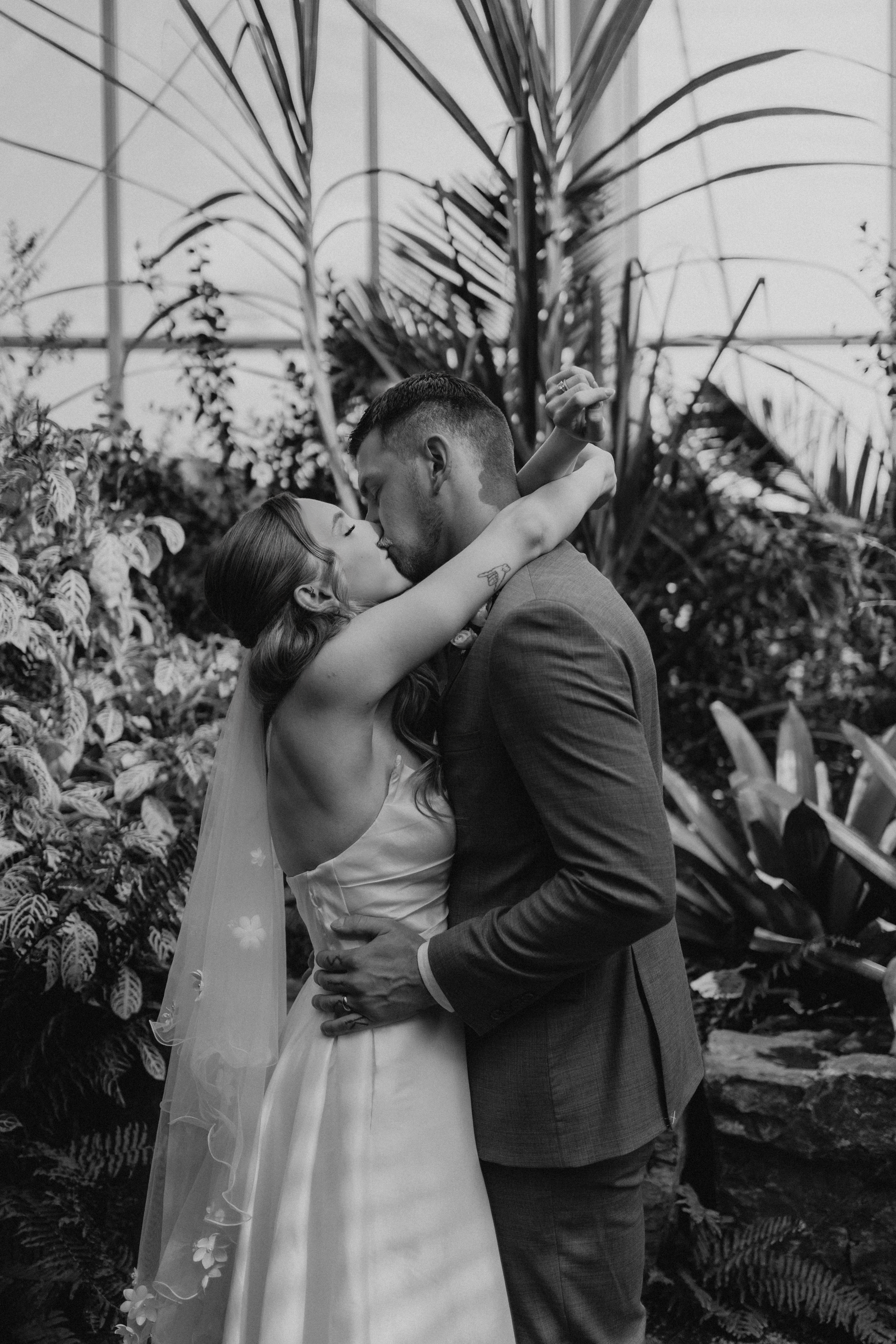
Liam and Tanya's first kiss at The Leaf, Assiniboine Park — wedding photography by Ngo Photography

Question 04 — What does your pricing actually include?

Wedding photography pricing is rarely as straightforward as a number on a website. The base package price often doesn't include travel, a second shooter, an engagement session, albums, or extended hours. Ask specifically what the quoted price covers and what costs extra — and get the full breakdown before you compare quotes between photographers.

Albums are worth a specific conversation. Some photographers include them in every package; others price them separately at $1,500 to $3,000 or more. A quote that looks lower on the surface may end up more expensive once albums and add-ons are factored in. A quote that looks higher may include everything you actually want.

Also ask about overtime. Most photographers quote coverage up to a specific number of hours — often eight or ten. What happens if your reception runs late? Is additional time available, and at what rate? Getting this in writing protects both of you.

"A quote that looks lower on the surface may end up more expensive once albums and add-ons are factored in. Ask what's included before you compare."

Question 05 — How quickly do they respond to you?

Most couples choose their photographer based on Instagram. They scroll through a feed, fall in love with the work, and reach out — and then wait three days for a reply. Communication is one of the most undervalued factors in hiring a wedding photographer, and one of the clearest early signals of what working together will actually feel like.

Pay attention to response time during the inquiry stage. A photographer who takes a week to reply to your first message isn't going to become a faster communicator after you sign the contract. That response pattern reflects how they run their business — and it's what you'll be dealing with every time you have a question in the months leading up to your wedding.

What you should be looking for: a photographer who replies to inquiries within a few hours, not a few days. One who offers a clear way to reach them for quick questions — not just a contact form that routes into an inbox they check occasionally. Some photographers allow clients to text them directly; that kind of access matters when you have a small question the week before your wedding and don't want to wait two days for an email response.

You're going to be in communication with your photographer for months before your wedding day. The ease of that relationship — whether they feel available, responsive, and genuinely invested — affects your experience from the moment you book to the moment you receive your gallery. It's worth evaluating before you commit, not after.

Question 06 — How long until we get our photos?

Industry standard is 6–10 weeks for a full wedding gallery. Many photographers will deliver a sneak peek of 10–20 images within the first week — a small preview while editing is still in progress. Beyond that, the full gallery takes time to edit properly, and a realistic timeline is part of what you're paying for.

Timelines longer than 12 weeks aren't inherently a red flag — some photographers are meticulous, some are in high demand, and summer wedding season creates genuine backlogs. But longer timelines deserve a clear explanation, not just "I take my time." Ask what's driving the timeline and whether that pace is reflected in the quality of work you've seen.

Whatever the answer, confirm that the delivery date is written into your contract. A verbal commitment to "about eight weeks" is not the same as a contractual obligation. The contract protects you if circumstances change.

Question 07 — What do you need from us?

This question is underasked and genuinely useful. A good photographer will have specific answers: a detailed timeline sent at least two weeks before the wedding, a list of family groupings for formal portraits, the names of key people they should be watching for during the day, and a venue contact they can reach on the morning of.

Photographers who say they don't need anything — "just show up and enjoy your day" — are either very experienced or not paying enough attention. The photographers who ask good questions before the wedding are usually the ones who produce the best coverage on the day. The more they understand about your day, your family dynamics, your priorities, the more they can anticipate what matters to you rather than just reacting to what happens.

Good signs
  • Asks about your timeline in detail
  • Wants to know key family members by name
  • Asks about your priorities and must-have shots
  • Requests venue contact and floor plan
  • Schedules a planning call before the wedding
  • Asks about any family situations to be sensitive to
Worth noting
  • No pre-wedding planning call offered
  • Doesn't ask about the timeline until late
  • Leaves shot list entirely up to you
  • Vague about what information they need
  • Hard to reach during the booking process
  • Takes days or weeks to reply to emails
  • No clear channel for quick questions between booking and the wedding
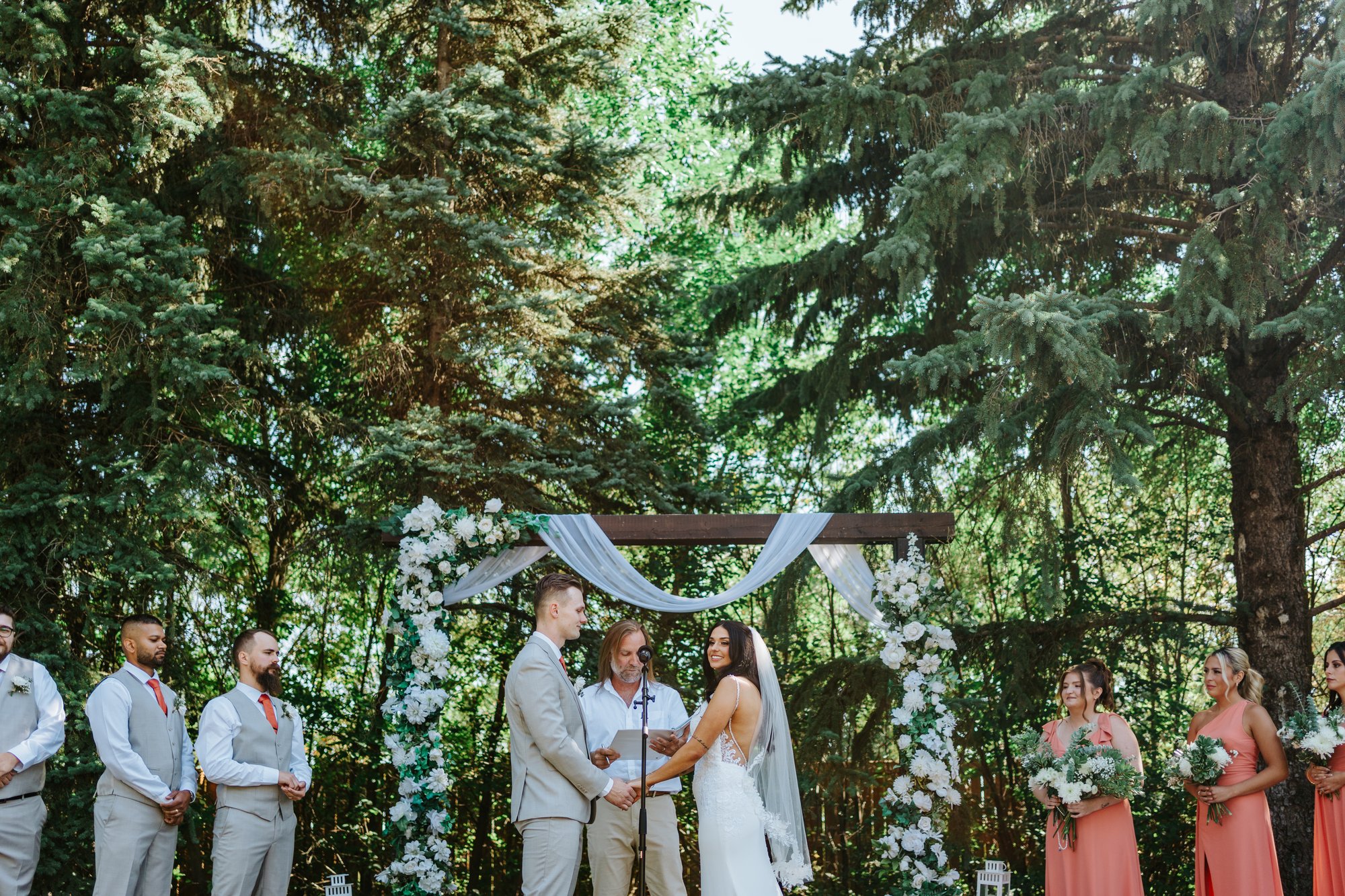
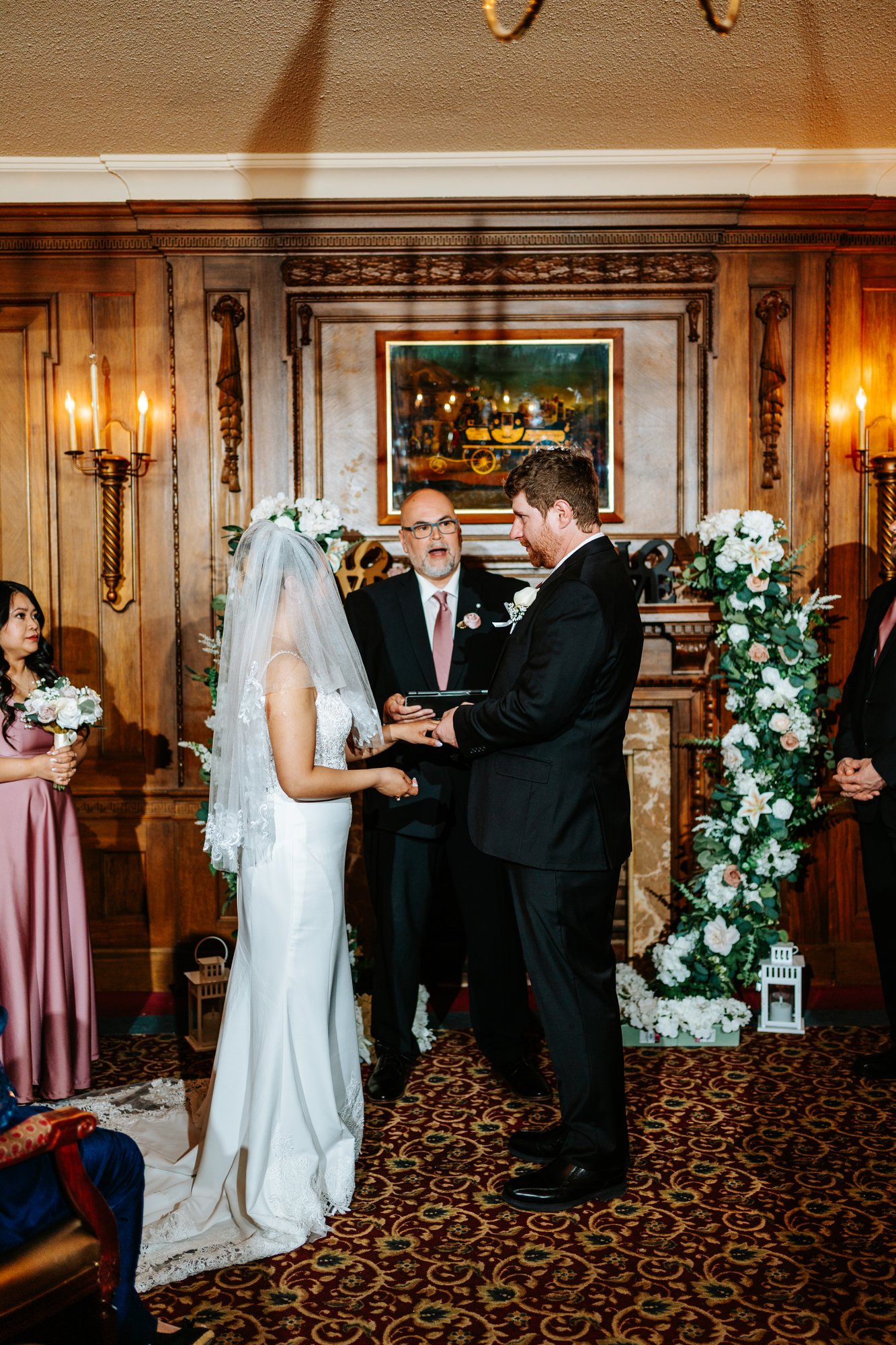
Brandon and Selena's ceremony at Ashgrove Acres — wedding photography by Ngo Photography
Eden and Justin's intimate ceremony at Bailey's Restaurant — wedding photography by Ngo Photography
Two very different venues — what they share is thorough planning before the day.

Question 08 — Have you shot at our venue before?

Prior venue experience is genuinely useful — a photographer who has worked at your venue before knows where the light falls at 4pm, which hallway makes for a beautiful portrait, and which rooms to avoid during cocktail hour because the ceiling lights are unflattering. That familiarity translates directly into better photographs and a smoother day.

That said, inexperience with a venue is not disqualifying. A skilled photographer who has never been to your venue will scout it in advance, arrive early, and adapt. What matters is whether they take that preparation seriously — not whether they already have the location memorized. Ask what their process is for venues they haven't worked at before. The answer tells you a lot about how they approach their work generally.

Question 09 — Are you insured?

Yes, this is something you need to ask. Professional liability insurance protects you if something goes wrong — equipment failure, an accident at the venue, a situation where coverage was missed. Many venues across Winnipeg and Manitoba require proof of vendor liability insurance before allowing photographers on site; if your photographer isn't insured, you may face a problem the morning of your wedding that can't be easily solved.

A photographer operating professionally should carry both general liability insurance and, ideally, errors and omissions coverage. If they seem surprised by the question or can't provide proof of insurance quickly, take that seriously. Insurance is a basic cost of operating as a professional — not carrying it suggests either inexperience or a business model that treats your wedding as casual freelance work.

Question 10 — What's in the contract?

Read the contract. Not the summary. The actual contract. Key things to confirm are present: your wedding date, the coverage hours, the number of photographers, the delivery timeline, the file format and resolution of the delivered images, the cancellation and rescheduling policy, and who owns the copyright to the photographs.

Copyright is worth a specific note. In Canada, copyright in photographs typically belongs to the photographer unless explicitly assigned otherwise. What you're almost always purchasing is a license to use the images — print them, share them, display them — rather than ownership of the copyright itself. That's normal and expected. What's worth confirming is the scope of that license: can you print them anywhere, share them freely on social media, use them in a newspaper announcement? Most photographers grant broad personal use licenses; just confirm yours does.

Also look at the cancellation policy carefully. What happens to your retainer if you need to postpone? What constitutes a cancellation versus a date change? What's the policy if the photographer cancels? These provisions exist for a reason, and understanding them before you sign is significantly easier than navigating them in a moment of stress.

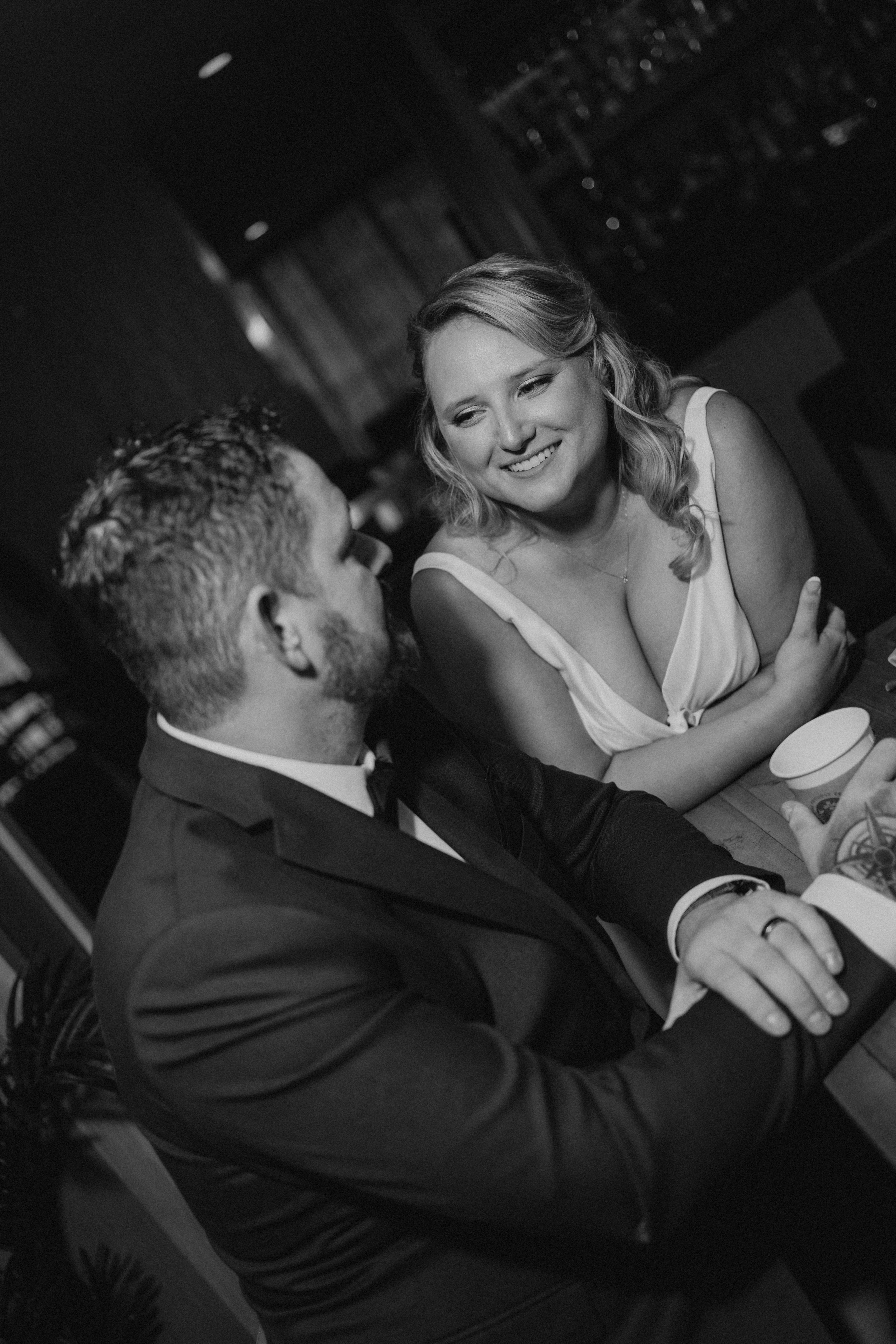
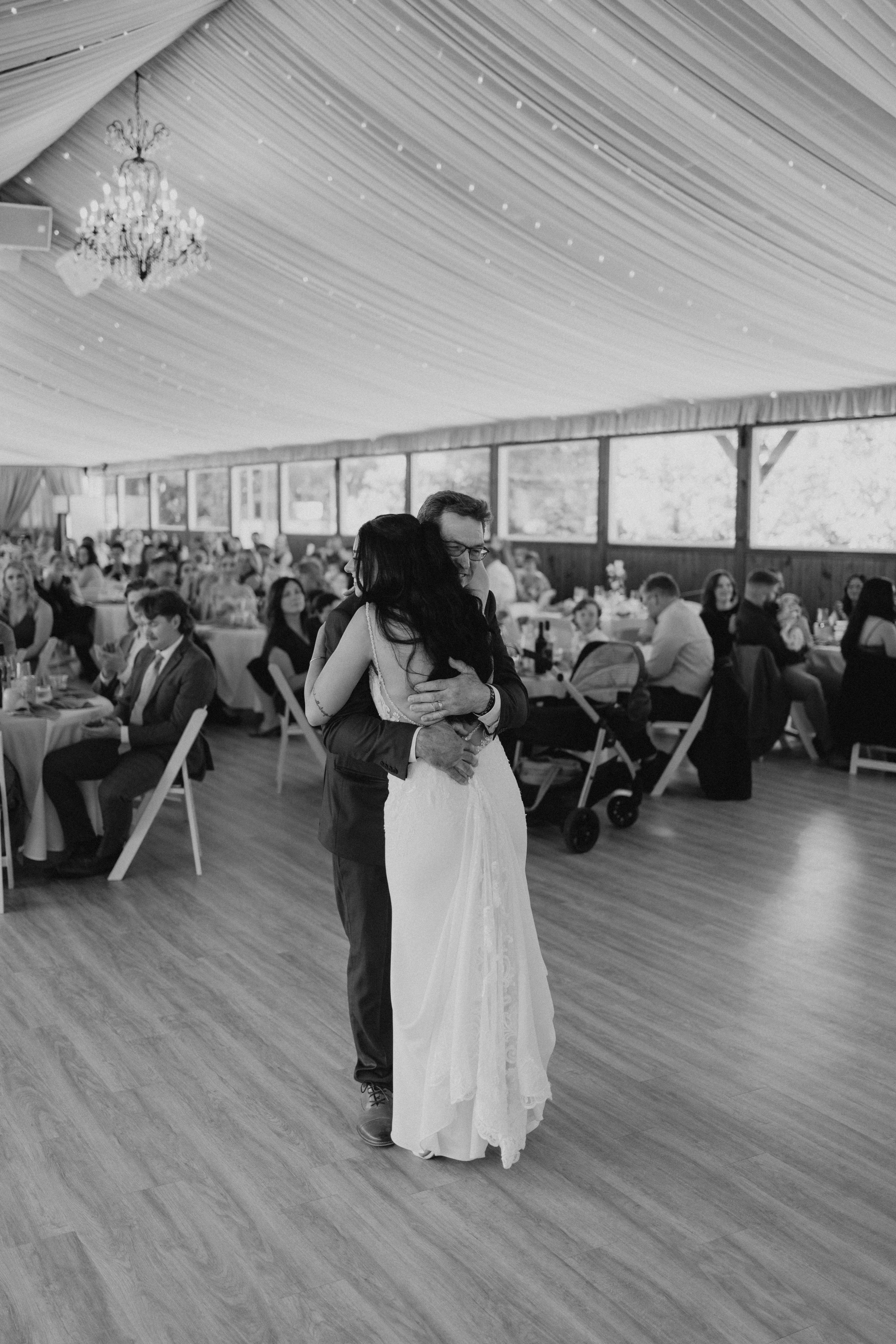
Dave and Bailey at their reception at Rudy's — wedding photography by Ngo Photography

Question 11 — Does this feel right?

After the practical questions are answered, this one matters more than most couples give it credit for. Your photographer will spend more time with you on your wedding day than almost anyone else — they'll be close during the quiet moments before the ceremony, present during family dynamics that can sometimes be complicated, and often the last vendor standing at the end of the night. The quality of that relationship affects the photographs.

Couples who feel comfortable with their photographer are photographed differently. They're not performing for the camera — they're just being themselves in front of someone they trust. That ease shows up in the images in ways that are hard to manufacture and impossible to edit in after the fact. If a photographer produces beautiful work but something about the communication or the meeting feels off, that feeling is information worth taking seriously.

The best outcome isn't just hiring a talented photographer. It's hiring a talented photographer you actually like — someone whose style aligns with yours, whose communication feels effortless, and who makes you feel more at ease rather than less when they walk into the room. That combination is what produces a wedding gallery you'll look at twenty years from now and feel something when you do.

Ready to ask the right questions?

Let's start with
a conversation.

Winnipeg weddings · Destination travel available · Limited dates per year

Begin your inquiry →
Questions & Answers

Hiring a wedding photographer —
your questions answered

What is the most important question to ask a wedding photographer?

Ask to see a complete wedding gallery — not a highlight reel, but every delivered image from a single wedding. A highlight reel shows you the best 30 shots from a photographer's best weddings. A full gallery shows you what you'll actually receive: how consistent the quality is, how the photographer handles difficult lighting, how complete the storytelling is across the full day. This one request tells you more than any other question.

How do I know if a photographer is too busy?

Ask how many weddings they take per weekend. A photographer who commits to only one wedding per day is giving yours their complete focus. If they're double-booked on weekends, ask who the lead photographer at your wedding would actually be — the name on the website may not be the person behind the camera. Slow response times during the booking process are also worth noting: how a photographer communicates before you book tends to predict how they communicate afterward.

Do wedding photographers need to be insured?

Yes. Professional liability insurance protects you if something goes wrong — equipment failure, illness, an accident at the venue. Many venues in Winnipeg and across Manitoba require proof of liability insurance before allowing vendors on site. A photographer without insurance is a risk to themselves and to you. Always ask, and always ask for proof.

How long does it take to get wedding photos back?

Industry standard is 6–10 weeks for full wedding galleries, though many photographers offer a sneak peek of 10–20 images within the first week. Timelines longer than 12 weeks should prompt a conversation about what's driving it — not necessarily a red flag, but worth understanding. Most importantly, confirm the delivery timeline is written into your contract, not just mentioned verbally.

What should be in a wedding photography contract?

At minimum: the wedding date and venue, hours of coverage, number of photographers included, the file delivery timeline and format, the usage license granted to you, the cancellation and rescheduling policy, and what happens if the photographer needs to cancel. Read the full contract before signing — not just a summary. If anything is unclear, ask before you sign rather than after.